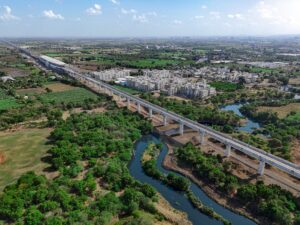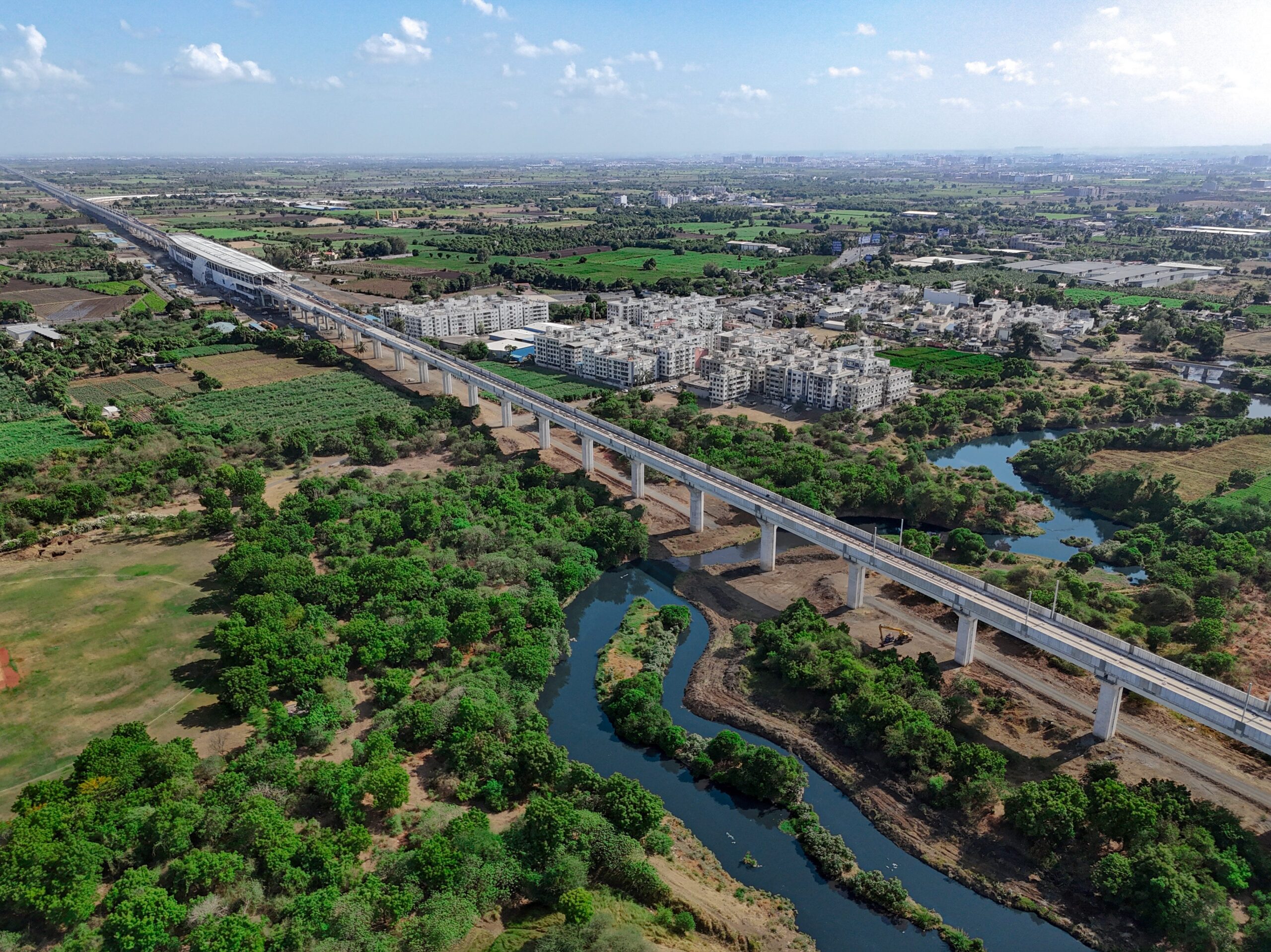
India’s First Bullet Train Set to Begin Operations in 2027: 508-Km Mumbai-Ahmedabad High-Speed Rail Corridor Nears CompletionNew Delhi: India’s first bullet train project is steadily moving towards completion, marking a major milestone in the country’s railway infrastructure development. The Mumbai-Ahmedabad High-Speed Rail Corridor is progressing through several important construction stages, including an undersea railway tunnel, elevated tracks, and modern high-speed railway stations.The first phase of the project is targeted to begin operations in 2027. Once operational, the bullet train is expected to significantly reduce travel time between Mumbai and Ahmedabad.The 508-kilometre-long corridor is being developed with advanced Japanese high-speed rail technology and modern engineering systems.508-Km Mumbai-Ahmedabad Bullet Train CorridorThe Mumbai-Ahmedabad High-Speed Rail Project is one of India’s most ambitious infrastructure initiatives.According to the construction progress figures shared for September 2026, approximately 456 kilometres of pier construction and 371 kilometres of viaduct construction had been completed.Additionally, around 6 lakh noise barriers have been installed across 299 kilometres of the corridor. More than 9,300 Overhead Electrification (OHE) masts have also been installed along 206 kilometres of the viaduct.The excavation of four mountain tunnels has been completed, while construction of the 21-kilometre-long tunnel in Maharashtra is progressing.Civil construction work at eight railway stations has also been completed, with finishing work underway.India’s First Undersea Railway TunnelOne of the most remarkable engineering features of the project is the railway tunnel passing beneath Thane Creek.The proposed 21-kilometre tunnel in Maharashtra will include approximately 7 kilometres of undersea construction.Two massive Tunnel Boring Machines (TBMs) were deployed in July 2026 to accelerate the excavation work. These machines are operating from the Vikhroli and Savali sides.Each machine has a cutterhead diameter of 13.6 metres, approximately equivalent to the height of a four-storey building.One of the machines weighs more than 3,000 tonnes and measures approximately 96 metres in length.These are among the largest tunnel boring machines ever deployed for infrastructure construction in India.Mumbai Bullet Train Station to Be Built 32 Metres UndergroundThe Bandra-Kurla Complex (BKC) in Mumbai will house the corridor’s only underground bullet train station.The station is being constructed approximately 32 metres below ground level, equivalent to the height of a 10-storey building.It will have three major levels, including platforms, a concourse and passenger facilities.The station will feature six platforms, each more than 400 metres long, allowing full-length bullet train services to operate.Maximum Design Speed of 350 KmphThe Mumbai-Ahmedabad High-Speed Rail Corridor has been designed for a maximum speed of 350 kmph, while the planned operational speed is 320 kmph.More than 90 per cent of the corridor will run on elevated viaducts.Approximately 465 kilometres of the track will be elevated above ground level. This design will help prevent railway crossing-related disruptions, animal movement on tracks and unauthorised access.The corridor will use specialised railway tracks, advanced signalling systems and modern power supply technology to ensure safe and efficient operations.Japanese Technology and India’s Growing Manufacturing CapabilitiesJapan is providing technological support for India’s first bullet train project.The foundation stone of the Mumbai-Ahmedabad High-Speed Rail Project was laid in 2017 in the presence of Prime Minister Narendra Modi and representatives of the Japanese government.The project is also using advanced construction techniques, including the Full Span Launching Method.Under this method, 40-metre-long concrete girders weighing approximately 970 tonnes are manufactured and transported to the construction site before being installed in a single operation.This technology helps accelerate construction compared to conventional methods.Several major construction equipment components and technical systems are also being manufactured by Indian companies, strengthening the country’s domestic infrastructure manufacturing capabilities.India Is Also Developing Its Own Bullet Train TechnologyAlongside the construction of railway infrastructure, India is working towards developing indigenous high-speed trainsets.Integral Coach Factory (ICF) and BEML are jointly developing the B28 trainset, designed to operate at speeds of up to 280 kmph.The first car body frame has been manufactured, and structural testing is underway. Track trials are proposed for mid-2027.Following this, India plans to develop the B35 trainset, designed for speeds of up to 350 kmph.Several important components related to the high-speed rail power infrastructure, including transformers, cables and other technical equipment, are also being manufactured domestically.Advanced Safety Technology for Bullet Train OperationsPassenger safety is a major priority in the Mumbai-Ahmedabad Bullet Train Project.The corridor will feature 28 seismic monitoring sensors, which will continuously monitor earthquake activity.In the event of an earthquake, the system will detect primary seismic waves and automatically cut off power supply, allowing trains to be brought to a safe stop.Additionally, 14 anemometers will monitor wind speeds along the route.Rainfall monitoring equipment will also be installed in sensitive areas.These safety systems will be integrated with a modern Operation Control Centre to ensure efficient monitoring and emergency response.Seven New High-Speed Rail Corridors AnnouncedApart from the Mumbai-Ahmedabad Bullet Train Project, India is planning to expand its high-speed rail network across several major cities.The Union Budget 2026-27 announced seven new high-speed rail corridors with a combined proposed length of approximately 4,000 kilometres.The estimated investment associated with these projects has been reported at around ₹16 lakh crore.The proposed corridors include:- Delhi to Lucknow – Approximately 2 hours 10 minutes- Delhi to Varanasi – Approximately 3 hours 50 minutes- Chennai to Bengaluru – Approximately 1 hour 13 minutes- Mumbai to Pune – Approximately 48 minutes- Bengaluru to Hyderabad- Chennai to Hyderabad- Proposed expansion connecting Pune to Hyderabad and Varanasi to Siliguri via PatnaThese proposed corridors aim to connect India’s major economic, industrial and commercial centres through a modern high-speed rail network.India’s First Bullet Train Expected to Run in 2027The Mumbai-Ahmedabad High-Speed Rail Project is targeting the commencement of its first operations in 2027.According to the proposed phased implementation plan, the initial train service is expected to begin between Surat and Vapi. Further sections will subsequently be opened in phases, with the ultimate objective of connecting Mumbai and Ahmedabad.The project represents much more than the introduction of a high-speed train service. It is expected to strengthen India’s engineering capabilities, modern railway infrastructure and domestic manufacturing ecosystem.Once operational, India’s first bullet train will mark a significant milestone in the country’s transportation history.